Best Dog Toys for Active Dogs: I Tested Every Single One. Personally.
Table of Contents
Hi. Bella here.
I've tested a lot of toys. A lot. Some lasted 4 minutes. Some lasted 4 seconds. And a few — a very proud few — actually made it onto this site.
If your dog is anything like me, they don't just play with toys. They destroy them, judge them, and occasionally carry them around the house like a trophy before losing interest forever. So when I say something is good, I mean it survived my standards.
This is not a list of "most popular" toys on Amazon. This is a list of toys that actually work for active dogs — explained, tested, and Bella-approved.
🐾 Who This Guide Is For
Dogs who get bored in 10 minutes. Dogs who destroy "indestructible" toys. Dogs who need mental AND physical stimulation — not just something to look at. If your dog has a graveyard of broken toys under the couch, keep reading.
First: What Makes a Toy Actually Good for Active Dogs?
Most people pick toys based on looks. Cute design, bright colors, low price — add to cart. But active dogs don't care about any of that. Here's what actually matters:
- Durability — can it survive more than one play session with a determined chewer?
- Engagement time — does it keep your dog busy for 10+ minutes or does interest drop in 30 seconds?
- Mental stimulation — does it make your dog think, problem-solve, or work for a reward?
- Safety — no small parts that can break off and be swallowed, no toxic materials
- Replay value — will your dog come back to it tomorrow, or is it a one-and-done?
Every toy on this list was evaluated on all five. If it failed any one of them, it didn't make the cut. Simple as that.
The 7 Best Dog Toys for Active Dogs — Bella Tested
1. Puzzle Feeders — The Daily Brain Workout
This is where I'd start with every active dog, no exceptions. Puzzle feeders turn mealtime or treat time into a 15–25 minute brain workout. Your dog has to slide panels, lift covers, spin compartments — all to get to the food hidden inside.
The result? A dog that is genuinely mentally tired, not just physically worn out. Mental fatigue is deeper and lasts longer than a run around the block. For Texas dog owners who can't exercise their dog outdoors in 100°F summer heat, a good puzzle feeder is non-negotiable.
"I finished my first puzzle feeder in 3 minutes. Then my mom made it harder. By week two I was spending 20 minutes on it and sleeping like I'd run a marathon. Puzzle feeders changed my life."
— Bella 🐾
Best for: Dogs who eat too fast, dogs with high energy, any dog over 6 months
Bella's rating: ⭐⭐⭐⭐⭐ — non-negotiable, every active dog needs one
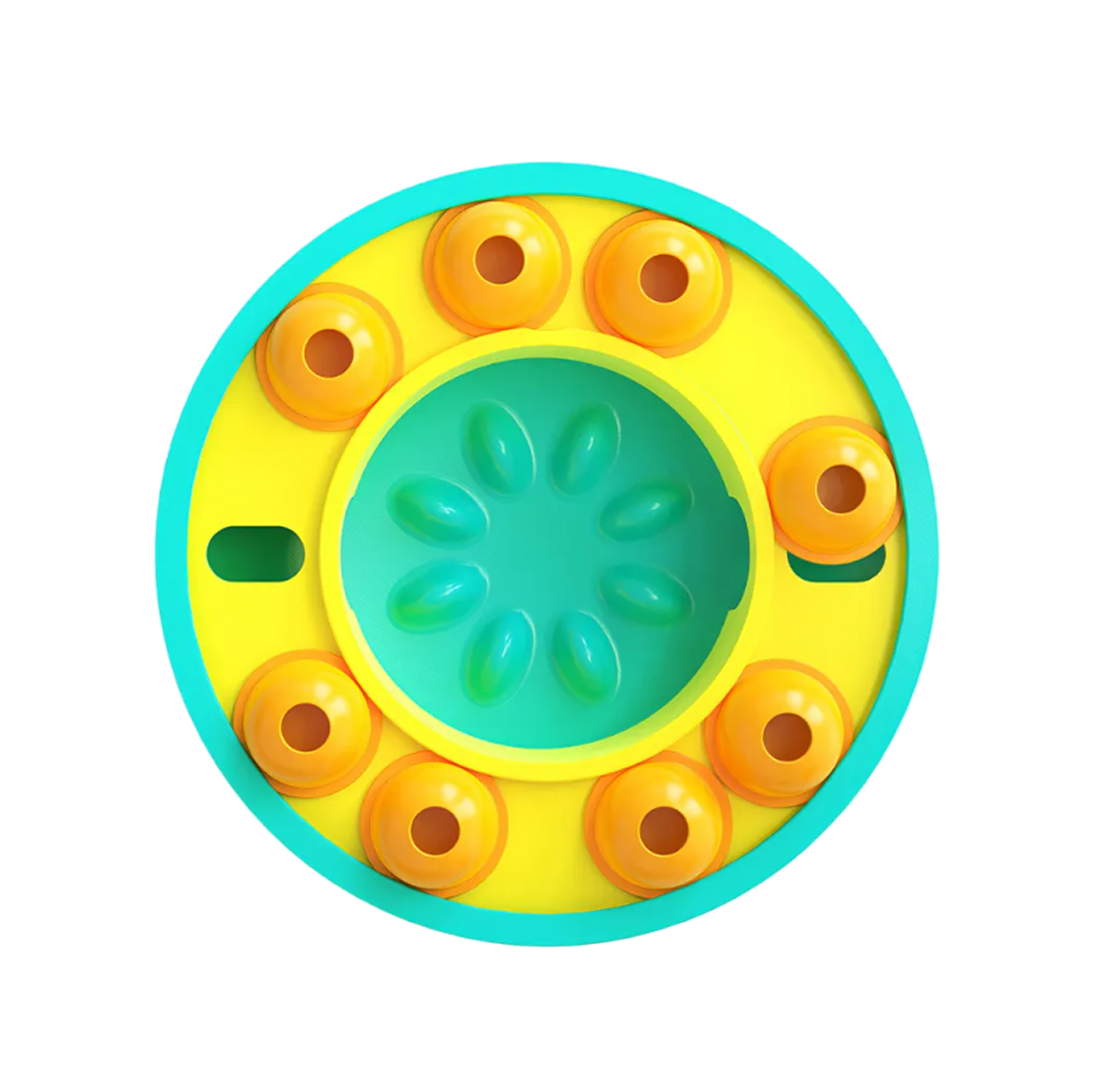
🐾 Bella Approved
Interactive Slow Puzzle Feeder Dog Bowl
$28.00
Sliding puzzle toy that turns every meal into a 15–20 min brain workout. IQ training, mental enrichment, slows fast eaters. BPA-free, non-slip, dishwasher safe.
2. Squeaky Chew Toys — The One That Gets Them Every Time
There's a reason squeaky toys have been around forever — the sound works. Dogs are wired to respond to high-pitched noises that mimic prey. But most squeaky toys are made from thin plush fabric that lasts about four minutes with any dog worth their salt.
The solution is a squeaky toy made from durable TPR rubber or thick latex — one that produces the sound on every bite, from anywhere on the toy, and doesn't fall apart after the first session. The corn chew toy is exactly that. It squeaks on every bite, cleans teeth as your dog chews, and has survived Bella's most dedicated destruction attempts.
💡 Bella's Pro Tip
Rotate squeaky toys in and out of your dog's toy box every 5–7 days. The same toy that gets ignored on day 8 becomes exciting again on day 15. Familiarity kills interest — mystery keeps it alive.
Best for: All dogs, especially high-energy breeds who need immediate engagement
Bella's rating: ⭐⭐⭐⭐⭐ — she carries this one around the house like a trophy
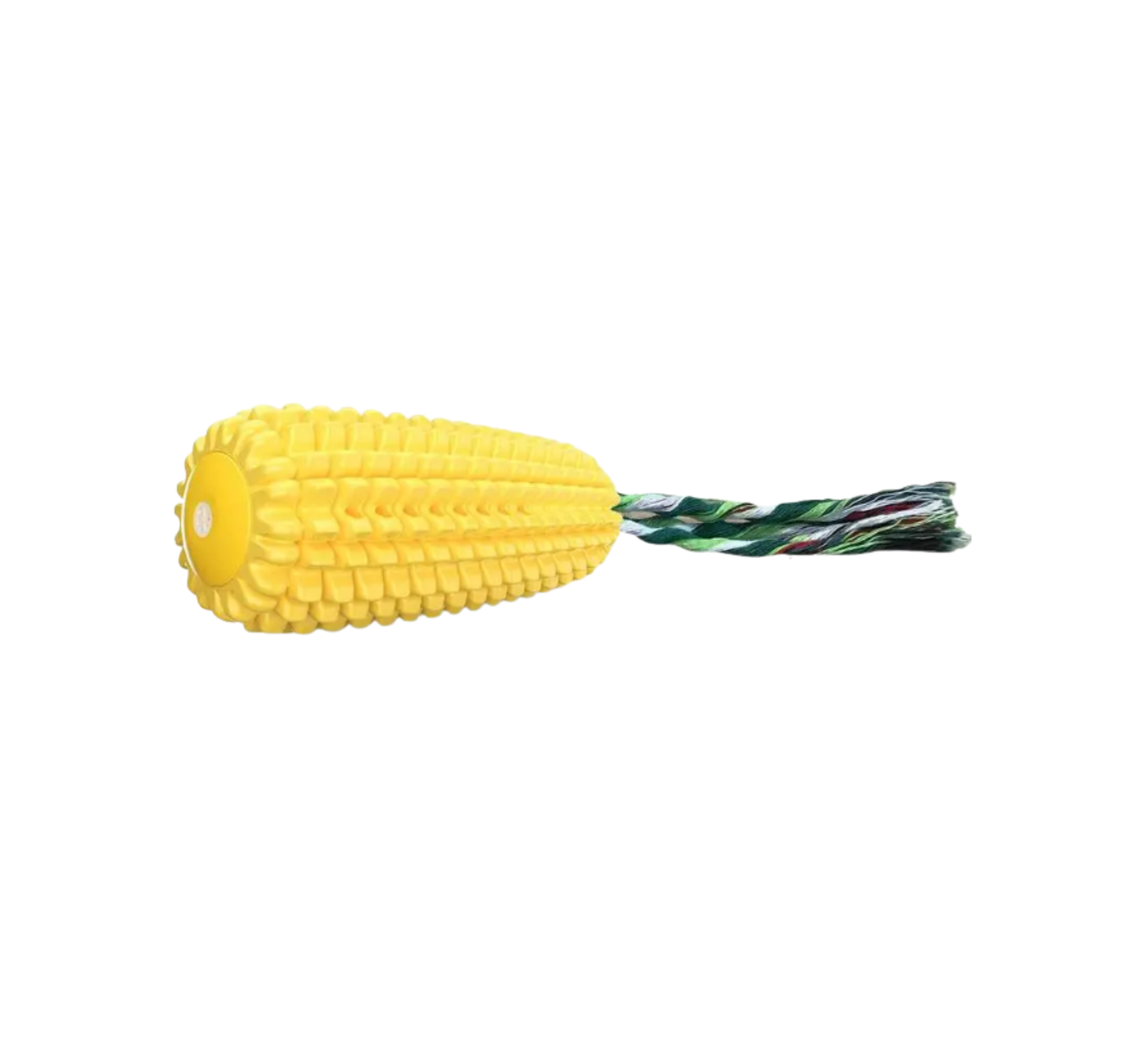
🐾 Bella Approved
Dog Squeaky Corn Chew Toy
$22.00
Durable TPR rubber squeaky toy that cleans teeth and relieves stress. Squeaks on every bite, anywhere on the toy. Safe for daily chewing.
3. Tug Toys — Bond, Train, and Tire Them Out Simultaneously
Tug gets a bad reputation. People think it makes dogs aggressive or dominant. This is outdated thinking — research from the University of Bristol found that tug play with clear rules actually increases obedience and strengthens the bond between dog and owner.
The key is structure: you start the game, you end the game, your dog drops on command. That's it. Tug becomes a reward for good behavior, a training tool, and a physical outlet all in one. A good rope tug toy with a ball at one end gives you fetch and tug in a single piece of equipment — two games, one toy.
What to look for in a tug toy: at least 18 inches long (keeps hands away from teeth), made from durable cotton rope, and with a handle that gives you a proper grip. The rope also flosses your dog's teeth during every session — passive dental care with zero extra effort.
Best for: High-drive dogs, dogs that need owner interaction, training reinforcement
Bella's rating: ⭐⭐⭐⭐⭐ — fetch mode AND tug mode in one, Bella's morning routine
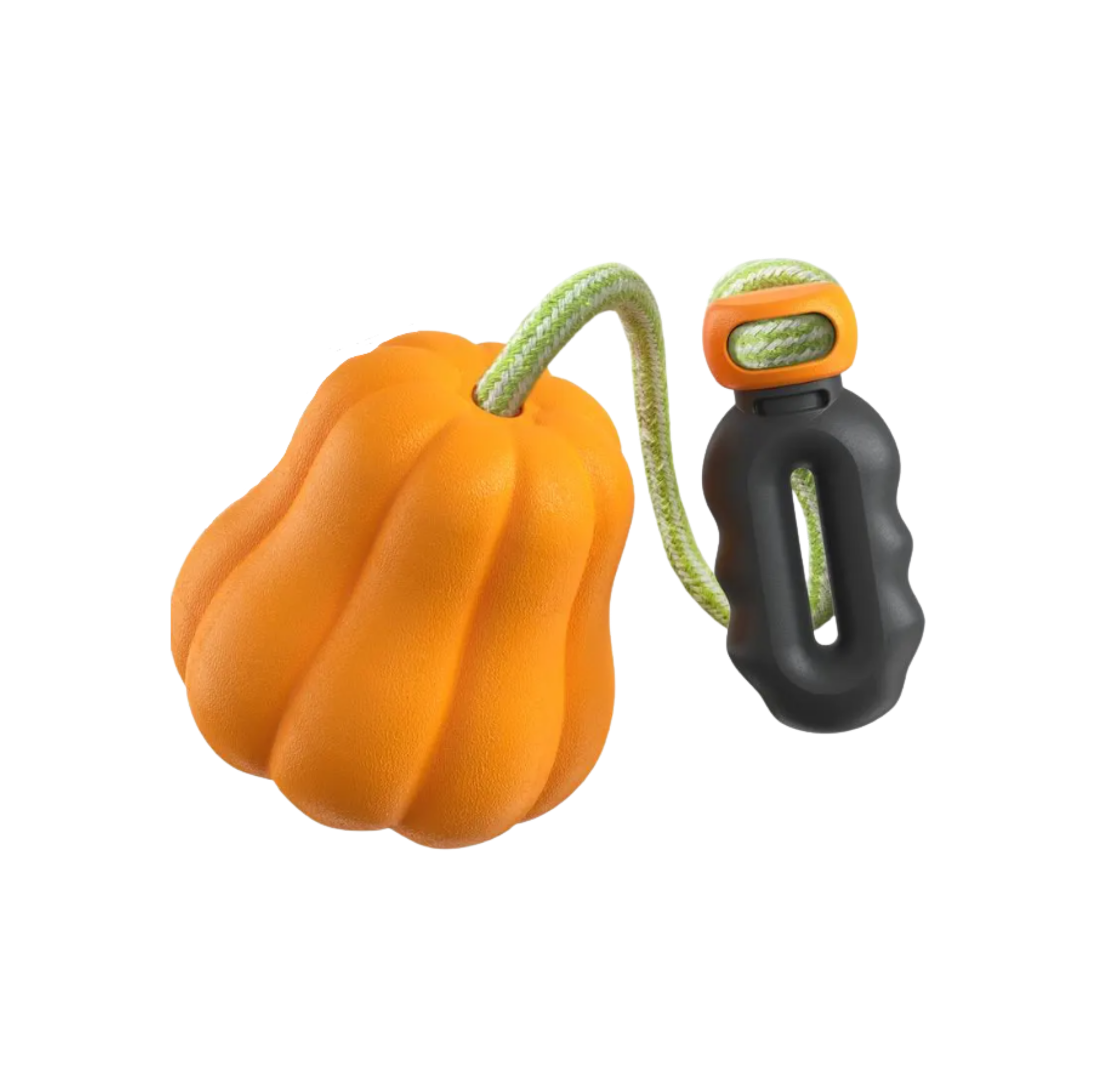
🐾 Bella Approved
Dog Rope Tug Toy — Fetch & Chew
$24.00
Cotton rope + rubber ball — fetch mode and tug mode in one toy. Flosses teeth during play. Built for medium and large aggressive chewers. High-visibility orange.
4. Rubber Chew Toys — The Frozen Trick That Changes Everything
A good rubber chew toy stuffed with food is one of the oldest tricks in the book — and it still works because it works for the right reasons. Chewing releases endorphins in dogs. It's genuinely calming and satisfying in a way that nothing else replicates.
The upgrade: freeze it. Stuff the toy with peanut butter, banana, kibble, or plain yogurt, then freeze for 2–4 hours. A frozen stuffed chew toy can keep an active dog occupied for 30–45 minutes and acts like a mental and physical puzzle at the same time.
💡 Bella's Pro Tip
Make a batch of 3–4 stuffed chew toys on Sunday and freeze them all. Pull one out each day that week. Takes 10 minutes of prep and gives you 5 days of 30-minute calm. Best trade-off in dog ownership.
Best for: Chewers, anxious dogs, crate training, post-exercise wind-down
Bella's rating: ⭐⭐⭐⭐⭐ — the frozen version is elite
5. Multi-Toy Packs — Rotation Built In
One of the biggest mistakes dog owners make is buying a single toy. Your dog figures it out, loses interest, and you're back to shopping. The smarter move is buying a pack — multiple toys in one purchase that you rotate through systematically.
A 3-pack of squeaky latex toys gives you three weeks of fresh engagement if you rotate correctly: one out at a time, swap every 5–7 days. By the time your dog sees the third toy, the first one feels brand new again. Same price as one premium toy, three times the engagement life.
"I have strong feelings about my squeaky toys. The chicken 3-pack gives me variety, unpredictability, and the element of surprise. I do not take this lightly."
— Bella 🐾
Best for: Dogs who lose interest quickly, owners who want variety without overspending
Bella's rating: ⭐⭐⭐⭐⭐ — the rotation system is the real product
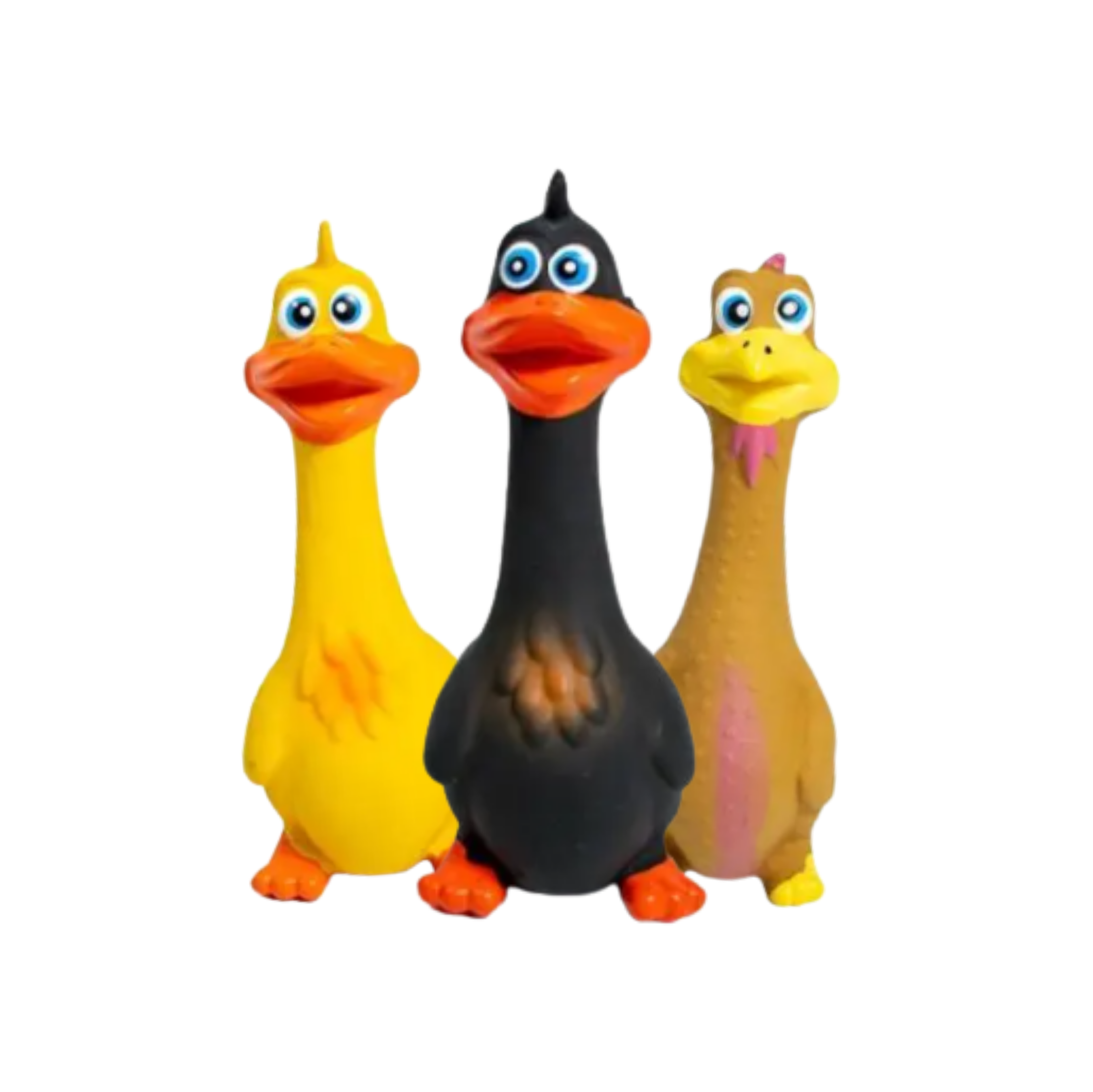
🐾 Bella Approved
Squeaky Dog Toys — 3-Pack Latex
$27.00
3 soft latex squeaky toys with loud squeaker on every bite. Eco-friendly TPR, non-toxic, BPA-free. Built-in rotation — one toy at a time, always feels new.
6. Flirt Poles — Maximum Tired in Minimum Time
Think of a flirt pole as a giant cat wand — for dogs. It's a long stick with a rope and a lure at the end. You move it along the ground and your dog chases, pounces, and grabs. For active dogs with high prey drive, this is one of the most effective physical exercise tools available.
Five minutes of flirt pole is the equivalent of 20–30 minutes of fetch in terms of physical exertion. It engages the whole body — sprinting, turning, jumping, grabbing — and it's joint-friendly because the dog controls their own momentum. Important for Texas summer months when you need maximum exercise in minimum outdoor time.
Important: teach "drop it" before you start, and always end the session by letting your dog "win" and carry the lure around for a moment. This satisfies their prey drive properly and prevents frustration.
Best for: High-energy dogs, small yards, quick exercise sessions
Bella's rating: ⭐⭐⭐⭐⭐ — underused by most owners, extremely effective
How to Build a Toy Rotation That Actually Works
The biggest mistake owners make after buying good toys: leaving them all out at once. Familiarity kills interest. Here's Bella's rotation system:
- Keep 2–3 toys accessible at any time — rotate the rest out of sight
- Swap every 5–7 days — "old" toys become exciting again after a week away
- Pair interactive toys with downtime — give a puzzle feeder after a walk, not before
- Save the best toys for training rewards — a tug toy session can replace treats entirely
- Retire damaged toys immediately — broken pieces are a swallowing hazard, no exceptions
"I have a toy box with 12 toys in it. My mom only leaves 2 out at a time. Every few days she swaps one out. I genuinely get excited like it's brand new. Don't underestimate the power of mystery."
— Bella 🐾
What to Avoid: Toys That Look Good But Aren't
⚠ Bella's Do Not Buy List
Laser pointers — create obsessive behavior and frustration because the dog can never actually "catch" anything
Any toy under $3 from discount shops — materials are usually untested, dyes may not be pet-safe, fall apart immediately
The Bottom Line
Active dogs don't need more toys. They need better toys — ones that engage their brain, satisfy their instincts, and hold up to real use.
The categories above cover every type of enrichment an active dog needs: mental stimulation, physical exercise, chewing, bonding play, and daily feeding enrichment. You don't need all seven at once. Start with a puzzle feeder and a good chew toy — and go from there.
Bella has tested everything on this list personally. The ones that didn't make it are collecting dust in a bin somewhere. The ones that did? They're on Bella Picks — because they earned it.
🐾 Every toy tested by a real dog
Only the toys that passed Bella's test make it to the shop
No filler. No cheap materials. No toys that break in a day. Just the ones that genuinely worked — tested by Bella, curated for your dog.
Shop Bella's picks →Ships across the USA